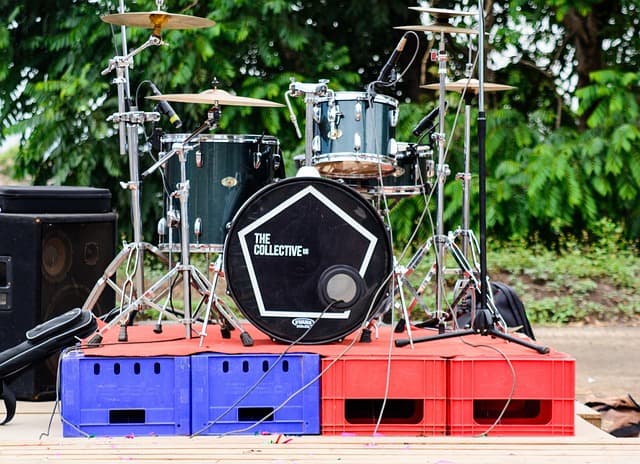
It is important for beginner drummers to set up their drum kit for high-quality sound. Read this article for tips and techniques to achieve the perfect sound!
If you are just starting to immerse yourself in the world of music and are taking your first steps with a drum kit, you are probably wondering how to tune your instrument so that it sounds as good as possible. Proper drum tuning is an art that requires patience and practice.
In this article, you will learn how to properly tune your drum kit to achieve the desired sound and delight yourself and those around you with music.
What is drum tuning and why is it necessary?
Drum tuning is the process of adjusting the tension of the drumheads (drum plates), which affect the sound of each instrument. Why is this so important? Imagine that your drum sounds like a pot—no musician wants their playing to be associated with kitchen utensils! Proper tuning helps achieve clarity of sound, expressiveness, and the necessary dynamics.
The main components of a drum kit
Before we move on to the tuning itself, let’s go over the main elements you will need:
- Drums (bass drum, snare drum, toms).
- Heads (top and bottom).
- Tuning key (or drum key).
- Listener (your ears are your best assistant!).
Steps for tuning a drum set
Now that we know what we need, let’s move on to the tuning steps themselves. It is important to follow a specific sequence here to achieve the best result.
Step 1: Preparing the drums
Before you begin, make sure your drums are clean and in good condition. Wipe them down with a soft cloth and check the heads for damage.
Step 2: Tuning the heads
- Start with the top head of the bass drum. Use a tuning key to tighten each bolt evenly.
- Once you have achieved the desired tension, move on to the snare drum and toms.
Step 3: Testing the sound
Once you have tuned the heads, try playing a few rhythms. If you are not satisfied with the sound, adjust the tension in some places—sometimes tightening evenly can produce unexpected results.
Step 4: Installing the bottom head
Don’t forget about the bottom head, as it also affects the overall sound. Tune it in the same way as the top head, following the same principles.
Technical details
Your drum kit may vary depending on the manufacturer and model, but it usually includes several key elements: drums (bass drum, snare drum, toms), cymbals (hi-hat, ride), as well as hardware and stands. Typically, drums range in diameter from 18 to 22 inches for bass drums and 10 to 14 inches for toms. The materials used to make the drums are also important, as they affect the sound and durability.
Features
Each drum kit has its own unique features that make it suitable for different playing styles. For example, some models have a quick-tuning system that allows you to easily change the settings of the drums and cymbals depending on your musical preference. Another important feature is the hardware — it must ensure that all parts are securely fastened.
In addition, modern drum kits often offer additional options, such as built-in modules for electronic drums, allowing you to experiment with sounds and effects. This is especially useful for beginner musicians because it gives them the opportunity to try their hand at different genres without buying a lot of separate instruments. If you prefer to compose music or shoot videos, having a MIDI output in your kit can greatly simplify the process of recording and digitizing your tracks.
